
Sandakphu Trek Guide
There’s a moment in every trek when the noise of everyday life fades away — and for me, that moment happened somewhere between a quiet forest trail and a distant snow-covered peak on the way to Sandakphu. It didn’t happen instantly. At first, my mind was still full — notifications, unfinished work, random thoughts. But step by step, as the trail went deeper into the forest and the air grew colder and cleaner, something shifted. The noise slowly disappeared. If you’ve ever dreamed of standing face-to-face with the tallest mountains in the world without needing to be a professional climber, then the Sandakphu trek might just be your kind of adventure.
Let me walk you through it — not like a guidebook, but like a friend who’s already been there.

Why Sandakphu is So Special
Sandakphu isn’t just another trekking destination. It’s the highest point in West Bengal, sitting at around 11,930 feet. But numbers don’t really explain why people fall in love with this place.
What makes it magical is the view.
From the top, you can see four of the five highest peaks in the world lined up like a painting — Everest, Kanchenjunga, Lhotse, and Makalu. Locals even call it the “Sleeping Buddha” because the mountain range looks like a sleeping figure. The first time you see it, you don’t say anything. You just stand there. Cold wind, silence, and mountains that feel unreal. And trust me, no photo truly captures what it feels like to stand there, with clouds drifting below your feet.
Best Time to Visit
If you’re planning this trek, timing matters a lot.
1. Spring (March to May): This is when the trail feels alive. Rhododendrons bloom in shades of red and pink, and the forest almost feels like a painting. The weather is pleasant, and the overall experience feels vibrant.
2. Autumn (October to December): This is my personal favorite. The skies are crystal clear, and the mountain views are at their best. You wake up to sharp, golden sunrises and freezing but refreshing air.
Avoid the monsoon season (June to September). The trails get slippery, leeches can be an issue, and most of the time, the mountains stay hidden behind clouds.
How to Reach the Starting Point
Your journey doesn’t start on the trail — it starts much earlier.
First, you need to reach New Jalpaiguri (NJP) or Bagdogra Airport. From there, you travel to a small mountain village called Manebhanjan, which is the base point of the trek. The drive itself is beautiful. As you leave the crowded towns behind and start climbing into the hills, you can feel the transition. The air gets cooler, the roads narrower, and life slower. Manebhanjan is a simple place. Small shops, local homes, and the starting point of something much bigger.
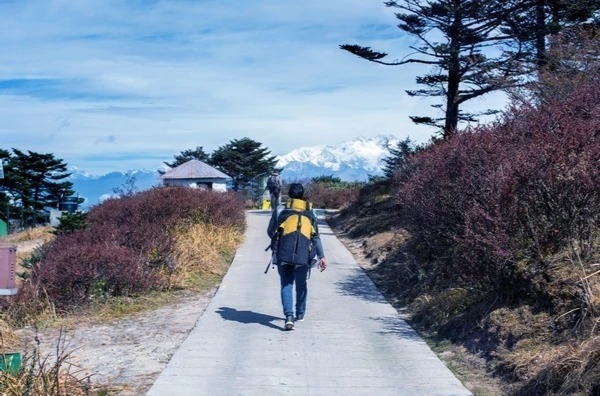
The Trek Route
Most people complete the trek in about 4–5 days. Each day feels different — physically and emotionally.
Day 1: Manebhanjan to Tonglu / Tumling
The first day is a reality check.
The climb starts almost immediately, and your legs will feel it. The path moves through forest trails and occasional steep roads. You might question your decision a few times — that’s normal.
But somewhere along the way, you start adjusting. Your breathing finds a rhythm, and your mind begins to settle.
By the time you reach Tonglu or Tumling, you feel tired — but also proud.
Day 2: Tonglu to Kalipokhri
This day feels calmer.
The trail moves through forests, small villages, and open landscapes. You meet locals, see simple mountain life, and maybe even share a smile or a cup of tea with someone.
The air gets thinner, but the views start opening up.
There’s a quiet beauty in this part of the trek — nothing dramatic, just peaceful.
Day 3: Kalipokhri to Sandakphu
This is the toughest and most important day.
The final stretch is steep. Your legs will feel heavy, and every step might feel slower than the last.
But then, you reach.
And suddenly, everything changes.
The tiredness fades into the background, and in front of you — the Himalayas.
Standing there, you realize the effort was never the difficult part. The real reward was this moment.
Day 4: Return Journey
Descending feels easier physically, but mentally, it’s different.
You’re not rushing anymore. You’re observing more. The same trail looks new in a different direction.
And somewhere inside, you already know — this experience will stay with you.
How Difficult is the Trek?
This is a moderate trek. You don’t need technical skills, but you need stamina. If you can walk 5–6 hours daily and stay consistent, you can complete it. It’s less about strength, more about patience.
Where You Stay
One of the most beautiful parts of this trek is the simplicity of the stay. You’ll find:
1. Small homestays
2. Trekker huts
3. Basic lodges
4. TeaHouses
Rooms are simple. Sometimes just a bed and a blanket. But after a long day of walking, that’s all you need. And then comes the best part — sitting with a hot cup of tea, wrapped in layers, looking at mountains through a small window.It feels enough.
Food on the Trek
Don’t expect fancy food here — and honestly, that’s the beauty of it. Most places serve:
1. Dal and rice
2. Roti and vegetables
3. Maggi or noodles
4. Eggs and tea
Simple, warm, and filling. After walking for hours, even a basic meal feels incredibly satisfying. There’s something about eating in the mountains — slowly, quietly — that makes you appreciate food more.
Permits & Entry
Since the trek passes through Singalila National Park, you’ll need: Entry permit and ID proof. These are usually arranged at the entry point, so don’t stress too much about it.
Mobile Network & Electricity
Let’s be honest — this is not a place for constant connectivity.
1. Network is limited (BSNL works best, sometimes)
2. Electricity is available but not always reliable
And honestly, this is one of the best parts. You disconnect from the world and reconnect with yourself.
What to Pack
Packing right can make or break your trek. Here’s what you’ll need:
1. Good trekking shoes
2. Warm layers (jackets, thermals)
3. Rain protection
4. Water bottle
5. Basic medicines
6. Snacks (dry fruits, energy bars)
Keep your bag light. You don’t need everything — just the right things.
A Few Things No One Tells You
The weather can change quickly. One moment it’s sunny, the next moment you’re inside clouds.Network is limited. And that’s actually a blessing.The real beauty of this trek is not just the destination — it’s the slow journey, the conversations, and the quiet moments.
Frequently Asked Questions (FAQs)
Is Sandakphu trek suitable for beginners?
Yes, Sandakphu is considered a moderate trek and is suitable for beginners with basic fitness. If you can walk for 5–6 hours a day, you can complete it comfortably.
What is the best time to do the Sandakphu trek?
The best time is during spring (March to May) for blooming rhododendrons and autumn (October to December) for clear mountain views.
Do I need a guide for the Sandakphu trek?
While experienced trekkers may go solo, it is recommended to take a guide for better navigation, safety, and local support.
How many days are required for the trek?
The trek usually takes 4 to 5 days, depending on your pace and route.
What kind of food is available during the trek?
You will find simple and fresh meals like dal, rice, vegetables, eggs, and noodles. Food is basic but warm and satisfying.
Is mobile network available on the trek?
Mobile network is limited. BSNL works in some areas, but don’t expect consistent connectivity.
What is the approximate cost of the Sandakphu trek?
The cost can range between ₹6,000 to ₹12,000 depending on whether you go independently or with a guided package.
A Moment I’ll Never Forget
One early morning at Sandakphu, I stepped outside before sunrise. It was completely silent. A few people stood there quietly, wrapped in layers, waiting. No one was talking. It felt like even a small sound would break the moment. Then slowly, the first light touched the peaks. Within minutes, the mountains turned golden — Kanchenjunga glowing in a way that doesn’t feel real when you see it in pictures. And in that moment, everything became still. No rush. No noise. No distractions. Just mountains, light, and silence. I remember standing there and realizing — this is why people come here. Not just for the trek, not just for the view, but for this feeling. Because it’s not just about reaching Sandakphu. It’s about every step that brought you here. Every tired climb, every pause to catch your breath, every moment you thought of giving up — all of it quietly leads to this one experience. And when you finally see it, you understand something very simple. We spend so much time rushing in life, but moments like these don’t come from rushing. They come from slowing down. Sandakphu teaches you that in the most honest way. It reminds you to breathe, to pause, and to notice things you usually miss. If this is your first trek, it’s a beautiful place to begin. And if you’ve trekked before, this one will still stay with you. Because some journeys don’t just show you mountains. They quietly change how you see everything else. And maybe that’s the real reason people come back. If you’re thinking about doing this trek, take it as a sign. Maybe it’s time to pack your bag and walk towards the mountains.