Dzongri Trek – The Gateway to High-Altitude Trekking in Sikkim
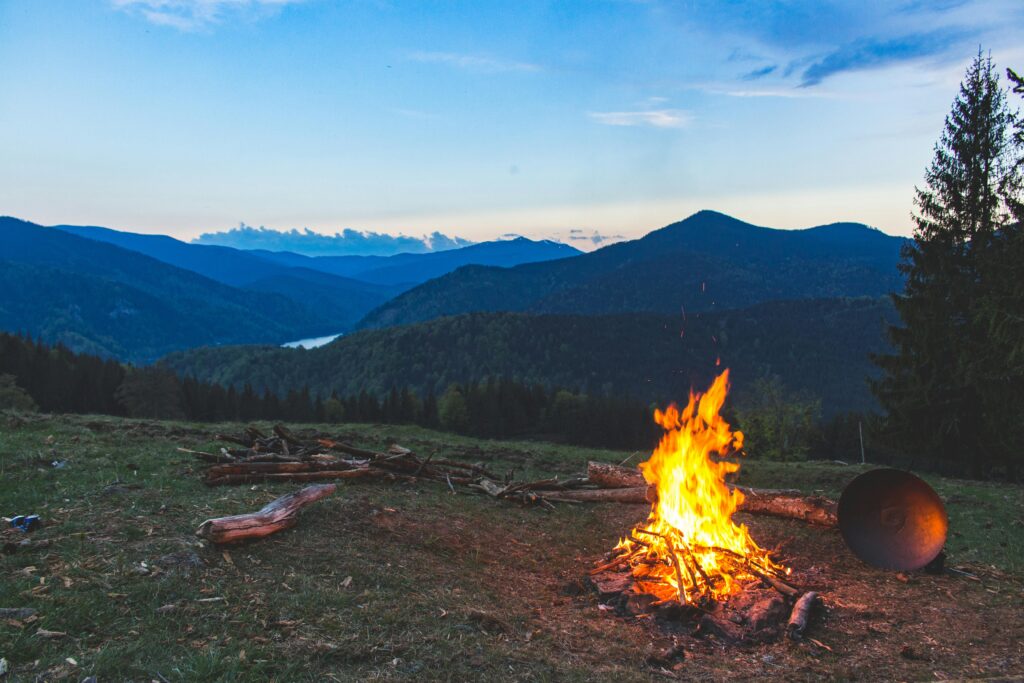
If there is one trek that gives you the “full” Sikkim experience without being too brutally difficult, it is the Dzongri Trek. Often called the “gateway to high-altitude trekking” in Sikkim, this trek is the perfect introduction to the majestic world of the Eastern Himalayas .
Nestled within the Khangchendzonga National Park—a UNESCO World Heritage Site—the Dzongri Trek takes you through dense rhododendron forests, picturesque villages, and alpine meadows, culminating in a breathtaking sunrise view from Dzongri Top . Standing at an altitude of over 13,700 feet, you’ll witness the golden hues of the Kanchenjunga range painting the sky—a moment that every trekker cherishes for a lifetime .
Whether you are a first-time trekker looking for an achievable challenge or an experienced hiker wanting a shorter Himalayan fix, the Dzongri Trek is the perfect choice

Why Choose the Dzongri Trek?
1. Perfect Introduction to High-Altitude Trekking
The Dzongri Trek is ideal for those who want to experience the Himalayas without committing to longer, more strenuous treks like the Goechala. With a manageable duration of 5-7 days and moderate difficulty, it’s the perfect “gateway” trek .
2. Spectacular Sunrise at Dzongri Top
This is the trek’s crowning glory. An early morning hike to Dzongri Top rewards you with a breathtaking 360-degree panorama of the Kanchenjunga range, including peaks like Pandim, Kabru, Rathong, Koktang, and many others . The sight of the first rays of light hitting the snow-capped peaks is simply unforgettable .
3. Enchanting Rhododendron Forests
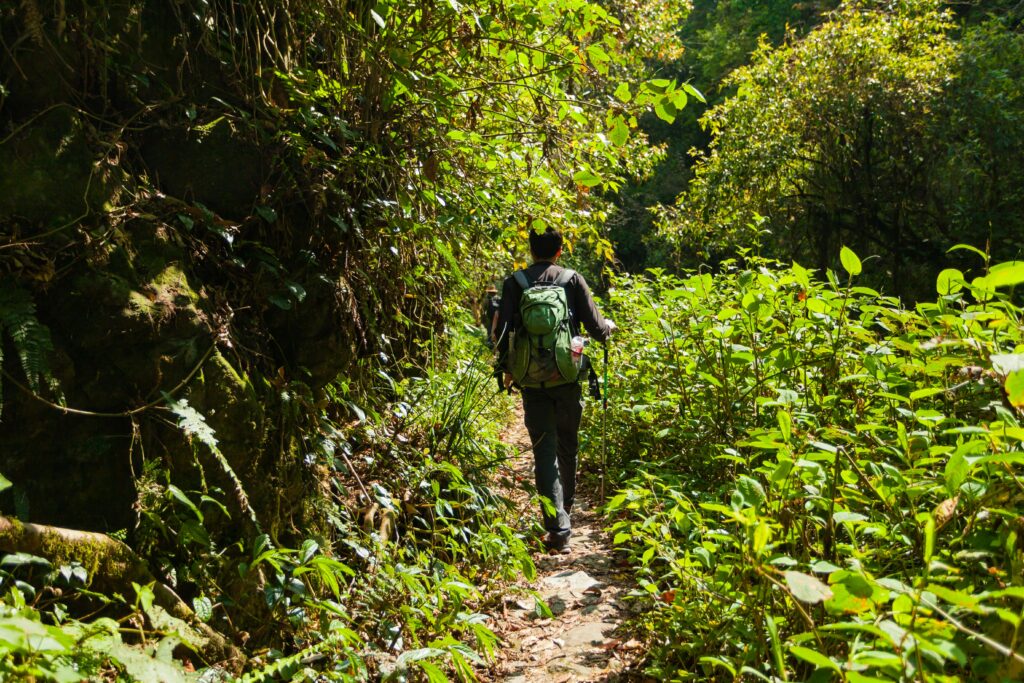
The trail meanders through dense forests of rhododendron, magnolia, oak, and pine . In spring (April-May), the hillsides come alive with vibrant red, pink, and white rhododendron blooms, creating a magical, colorful tunnel to walk through .
4. Rich Biodiversity
As part of the Khangchendzonga National Park, the region is home to diverse wildlife, including the elusive Red Panda, Himalayan Black Bear, Blue Sheep, and numerous bird species . Birdwatchers will delight in spotting pheasants, sunbirds, and Himalayan griffons .
5. Cultural Immersion
The trek begins in Yuksom, the historic first capital of Sikkim. This charming town is steeped in history, with ancient monasteries like Dubdi and the Coronation Throne of Norbugang . Along the trail, you’ll also encounter Tibetan-style settlements like Tshoka, offering insights into local Buddhist culture .
Trek Overview
Detailed Day-by-Day Itinerary
This 6-day itinerary is the most common and well-balanced route for the Dzongri Trek .
Day 1: Yuksom to Sachen
- Distance: 8 km | Duration: 4-5 hours
- Altitude: 5,840 ft to 7,400 ft (approx.)
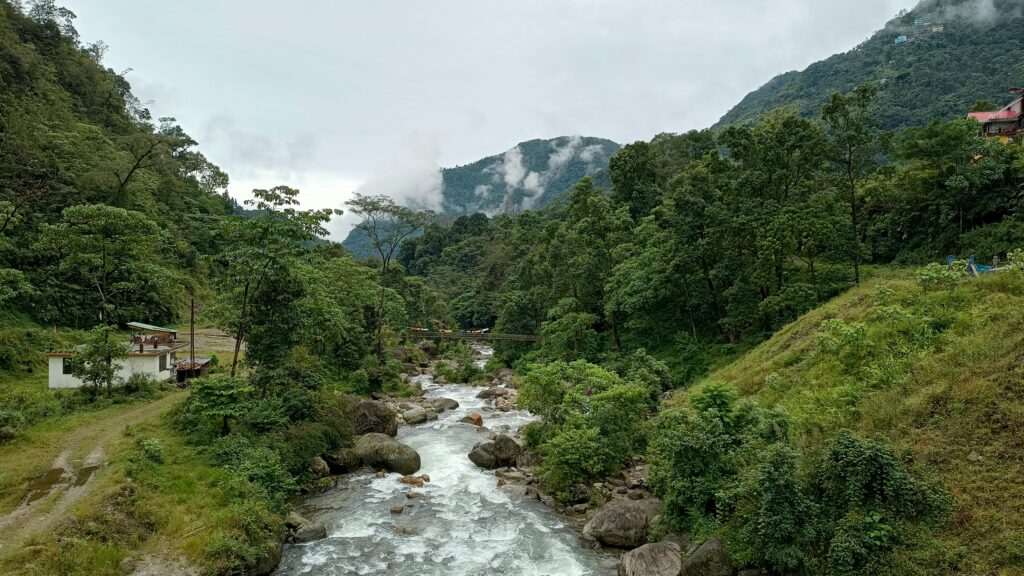
- Highlights: Gradual ascent through forests, crossing multiple suspension bridges over the Rathong River .
- Terrain: Gentle jungle trail with occasional climbs.
- Note: This is your first night of camping. There are no settlements or network beyond this point .
Day 2: Sachen to Tshoka via Bakhim
- Distance: 7 km | Duration: 5-6 hours
- Altitude: 7,400 ft to 9,700 ft (2,950 m)
- Highlights: Trek through dense forests of magnolia and rhododendron. Pass through the charming hamlet of Bakhim, offering the first views of Mt. Pandim .
- Terrain: Gradual ascent with some steeper sections.
- Accommodation: Camping at Tshoka, a beautiful Tibetan-style settlement with traditional wooden huts .
Day 3: Tshoka to Dzongri via Phedang
- Distance: 9 km | Duration: 6-8 hours
- Altitude: 9,700 ft to 13,200 ft (4,020 m)
- Highlights: This is the most challenging but scenic day. The trail climbs steeply through rhododendron forests to Phedang, a beautiful rest point adorned with prayer flags . From Deorali Top, you’ll get your first panoramic views of Kanchenjunga and Pandim.
- Terrain: Steep ascent, significant altitude gain. Go slow and pace yourself.
- Accommodation: Camping at Dzongri meadows.
Day 4: Acclimatization Day at Dzongri (Dzongri Top & Laxmi Pokhari)
- Distance: 2 km round trip to Dzongri Top + optional hike
- Duration: 1.5 hours to Dzongri Top + 3-4 hours for Laxmi Pokhari
- Altitude: 13,200 ft to 13,980 ft (Dzongri Top)
- Highlights:
- Early Morning: Wake up before dawn and hike to Dzongri Top for a spectacular sunrise over the Kanchenjunga range, including views of Mt. Pandim, Kabru, Rathong, and Koktang .
- After Breakfast: Optional hike to Laxmi Pokhari, a beautiful glacial lake cupped in a crater, offering stunning reflections of the surrounding peaks .
- Purpose: This rest day is crucial for acclimatization and allows you to soak in the mountain views .
Day 5: Dzongri to Tshoka
- Distance: 9 km | Duration: 5-6 hours
- Altitude: 13,200 ft to 9,700 ft
- Highlights: Retrace your steps back to Tshoka, enjoying the forests and views from a different perspective. The descent is steep in sections—watch your knees and pace yourself .
- Terrain: Steep descent through rhododendron forests.
- Accommodation: Camping at Tshoka.
Day 6: Tshoka to Yuksom
- Distance: 15 km | Duration: 5-6 hours
- Altitude: 9,700 ft to 5,840 ft
- Highlights: Final descent through forests and across suspension bridges back to Yuksom .
- Terrain: Gradual descent, mostly downhill.
- Celebration: Arrive in Yuksom and celebrate the successful completion of your trek! Overnight at a guesthouse or hotel .
What Makes Dzongri Special
Best Time to Trek
Difficulty and Fitness Requirements
The Dzongri Trek is rated Moderate to Challenging . Here’s what you need to know:
Recommended Training:
- Cardio: Running, cycling, swimming (30-45 minutes, 4-5 times a week)
- Strength: Focus on legs, core, and back
- Practice: Hike with a loaded backpack on weekends, including steep sections
Altitude Sickness Prevention
Understanding and managing altitude sickness is key to a successful trek . Follow these golden rules:
- Ascend slowly—your itinerary includes acclimatization days for a reason
- Stay hydrated (drink 3-4 liters of water daily)
- Listen to your body and inform your guide immediately if you feel unwell
- Avoid alcohol and smoking during the trek
- Consider carrying AMS medication (consult your doctor)
Permits and Regulations
Since the Dzongri Trek lies within the Khangchendzonga National Park, permits are mandatory and can only be issued through registered trekking operators .
| Permit Type | Details |
|---|---|
| Trekking Permit | Issued by the Tourism Department |
| Forest Entry Fee | Required for entering the national park |
| ILP (for foreigners) | Inner Line Permit for foreign nationals |
Important: Hiring a Yuksom-based local agent is strongly recommended. They manage permits, staff, yaks, camping gear, and food, and their familiarity with the terrain enables faster response during emergencies
Essential Packing List
Why Book This Trek Through Us?
Frequently Asked Questions
Q: Is Dzongri Trek suitable for beginners?
A: Yes, it’s suitable for beginners with good fitness levels and some prior trekking experience. It’s considered the perfect “gateway” trek to high-altitude Himalayas .
Q: What is the maximum altitude on this trek?
A: The maximum altitude reached is approximately 13,980 feet at Dzongri Top .
Q: How long does the Dzongri Trek take?
A: The trek typically takes 5 to 7 days, depending on the itinerary and pace .
Q: What is the best time for the Dzongri Trek?
A: Spring (March-May) for rhododendron blooms and autumn (September-November) for the clearest mountain views .
Q: Do I need a permit for the Dzongri Trek?
A: Yes, permits are required. We arrange all permits for you .
Q: Is there mobile network connectivity on the trek?
A: No, there is no mobile network beyond Yuksom. It’s a great opportunity to disconnect .
Q: Can I do this trek solo?
A: Solo trekking is not permitted. You must go with a registered agency for safety and permit reasons .
Q: How cold does it get at night?
A: Temperatures can drop below freezing at night, especially at higher altitudes. Proper cold-weather gear is essential .
Final Thoughts
The Dzongri Trek is more than just a walk in the Himalayas—it’s an emotional journey that stays with you long after you return. From the peaceful monasteries of Yuksom to the breathtaking sunrise at Dzongri Top, every moment feels spiritual .
Whether you’re trekking for adventure, photography, or to simply reconnect with nature, this iconic Sikkim trek will leave a permanent mark on your heart. It’s the perfect introduction to the grandeur of the Eastern Himalayas and a stepping stone to even greater adventures like the Goechala Trek .
Ready to experience the magic of the Dzongri Trek? Contact us to book your adventure or ask any questions. The mountains are waiting!